Career Spotlight: Teaching and Stuttering
January 27, 2026
Guest Contributor
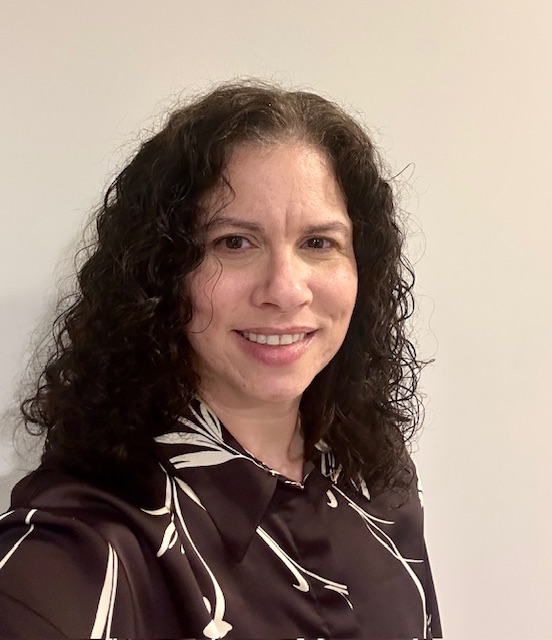


Pauline Benner is a teacher, musical director and professional musician living in Fort Wayne, Indiana. She spoke with AIS about her experiences teaching with a stutter, including how she talks to her students about stuttering, and how she manages classroom interruptions.
I made a career change in my mid-40’s in order to become a teacher. I have a degree in music performance, and for over 25 years, I performed with professional theaters and orchestras, and taught private music lessons.
In 2020, my children transferred to a Lutheran school. The elementary general music teacher had recently quit, so they didn’t have any music classes. I had absolutely no desire to teach in a classroom - because of my stutter. In fact, I chose to be an instrumental performer so that I could have a job that did not require speaking. One of my friends from church asked me if I would consider applying for the music teacher position at the school. I said no. A few weeks later, the assistant principal asked me to apply for the position. I said no again. But people kept asking me to apply. I was terrified, but I felt very sure that God wanted me to take this step, even though I thought it would be impossible for me. I never expected to be hired, but I felt that I was supposed to confront this challenge.
My principal suggested that I speak directly to the students about my stutter on the first day of class, and that’s exactly what I did. The students were incredibly receptive, and asked a lot of great questions. One third grade student even raised his hand and was so excited to share with the class that he stutters, too!
I applied for the position and was hired, and I also took a part time position as a teacher’s aide in a kindergarten classroom. Teaching in front of a classroom of students was incredibly difficult at first. My principal suggested that I speak directly to the students about my stutter on the first day of class, and that’s exactly what I did. The students were incredibly receptive, and asked a lot of great questions. One third grade student even raised his hand and was so excited to share with the class that he stutters, too!
After a year of working at the school, I knew without a doubt that I wanted to become a teacher. I felt energized every day, and loved spending time with the kids. The next summer I enrolled in a Transition to Teaching program at Purdue, and in 2024, I earned my teaching license in special education and music. My position has grown each year, and now I am the full time music director for the entire P-8 school.
Every day is very different because I teach a wide variety of classes and grade levels.
On Mondays, I mostly teach preschool music. I sit in a circle with 3-5 year-olds and teach them how to sing, move to music, and keep a steady beat. It’s so much fun! On Wednesdays, I teach general music for Kindergarten through third grade. We learn how to match pitch with our voices, play classroom instruments, how to read and write music, and also do a lot of dancing and moving to music.
Two days per week, I teach 4th - 8th grade choir and band. As you can imagine, the dynamic is very different when I’m teaching 3-year-olds on Monday, compared to when I’m teaching 14-year-olds on Thursday and Friday! I also stay after school on most days to teach extra-curricular activities like handbells, Middle School Praise Band, or give private lessons to band students. I’m on my feet most of the day dancing, singing, and speaking to 25 students at a time.
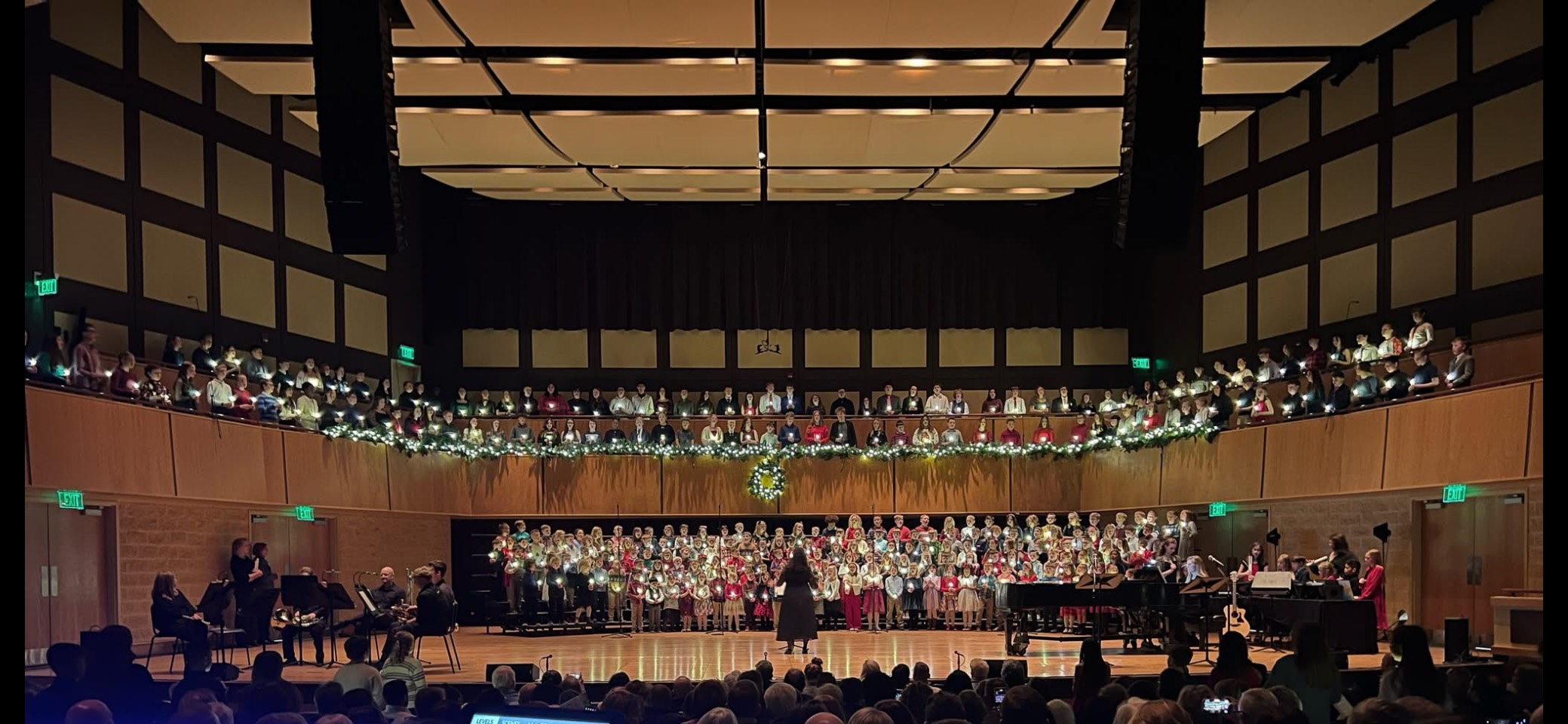
Occasionally, there are times when I need to lead larger activities. Recently, I led a music activity for Grandparents Day where I had to speak in front of 200 people, and I also directed the school Christmas program, where I had to lead two rehearsals with the entire student body of over 450 students.
I had absolutely no confidence that I could be successful as a classroom teacher. When I was in college, most of my friends who were music majors majored in music education so that they could have a better chance of finding a job after college. I chose to major in performance because I didn’t think that I could ever speak in front of a classroom of students, and I didn’t think I could pass the public speaking course that music education majors were required to take.
I chose to major in performance because I didn’t think that I could ever speak in front of a classroom of students, and I didn’t think I could pass the public speaking course that music education majors were required to take.
When I was interviewing for my current position, I was terrified. And it was back in 2021 when we were all still wearing face masks, so that made speaking even harder! When they offered me the position, I was shocked. But I decided that if other people had faith that I could be a good teacher, then I should trust their judgment. Honestly, it was difficult. But for the first time in my life, I really felt like I was in the right place at the right time, and doing what I had been created to do. It took a lot of faith to keep going and trust that God would give me the strength to do what He had called me to do.
The most difficult part is classroom behavior management. I’ve always stuttered more when people interrupt me when I’m speaking. In a classroom of 25 students who are all holding musical instruments, there are a lot of interruptions! The first year, I would get very frustrated with the students’ behavior, and stutter a lot while trying to get them to quiet down. But I have done a lot of research on classroom management techniques, and have since implemented classroom routines and procedures that help to keep behavior under control. I also have created many non-verbal cues for students to quiet down. Since I teach music, I also have the luxury of being able to sing to the class if I’m having a difficult day with stuttering.
The best part of my job is that I get to make music all day every day, and the kids are amazing! I never really knew how much I enjoyed being with children until I began working in a school. They make me feel so loved and appreciated, and there is nothing in the world like the feeling when a student finally understands something that you have been teaching. There is never a boring day at school. You never know what unexpected thing the kids will do or say! Also, watching my students grow and develop their musical skills over the years is so satisfying. For the first time in my life, I can see that I’m making a positive difference in the lives of other people.
For the most part, their response has been very positive. Students today are very different from when I was in elementary school in the 1980’s. When I was in school, I was bullied a lot because of my stutter. Other kids would call me “Porky Pig” and tell me to “spit it out!” when I would get stuck on a block. Now, kids are much more understanding of the fact that all people are different, and I see very few instances of students making fun of people with disabilities.
Students today are very different from when I was in elementary school in the 1980’s.
However, I did have one difficult situation last year. I also have Tourrettes, so sometimes I will have a lot of simple motor tics, like nodding my head or blinking my eyes. One of my 5th graders received a detention because he was openly mocking my tics with his friends in the hallway. When I read the behavior report, I cried. I was really hurt that one of my students would see me that way. After the initial shock and hurt, I reminded myself that he is a 10-year-old child, and I am the adult in the room who is responsible for teaching and nurturing him.
The next week, I took a few minutes in each of my classes to talk about my Tourrette’s and stuttering. I explained what they both are, and I read a passage from the Bible about how God made everyone differently, but He has a specific purpose for each person, and He made them exactly the way that he meant to. Then I opened up the room for students to ask me anything they wanted about Tourrette’s or stuttering. It was so amazing! They asked me questions about whether I was bullied in school, and about what goes on in my brain when I am stuck in a block. Several students shared with the class about the disabilities that they have. It was a beautiful time of connecting with my students. But I was definitely emotionally exhausted by the end of the day!
I opened up the room for students to ask me anything they wanted about Tourrette’s or stuttering. It was so amazing! They asked me questions about whether I was bullied in school, and about what goes on in my brain when I am stuck in a block. Several students shared with the class about the disabilities that they have. It was a beautiful time of connecting with my students. But I was definitely emotionally exhausted by the end of the day!
This has been the biggest surprise to me. I think the other teachers and administrators believe in me more than I believe in myself! After my first year of teaching, they approached me about the possibility of creating a full time Music Director position for me. I was mortified. I told them that there was absolutely no way that I could do that much public speaking, and oversee an entire program. It took two years for that position to become a reality, because I needed to earn my teaching license first, but now I’m doing it! I am truly blessed to be at a school where the administrators and faculty are so supportive and encouraging.
Be your authentic self with your students. Address stuttering head-on if they ask about it or mock it. 1% of the population stutters, so that means in a school of 400 students, there are probably about 4 students who stutter, and will be encouraged by having a teacher who openly stutters without shame. I often wonder how different my life would have been if I had a role model as a kid who was a Person Who Stutters. I carry a lot of regret over all of the years that I told myself that I couldn’t do certain things because of my stutter. I currently have a couple of students who stutter, and it brings me so much joy every time they raise their hand and confidently speak in class!
I currently have a couple of students who stutter, and it brings me so much joy every time they raise their hand and confidently speak in class!
If you love teaching, and you love the kids, they will see it even if you stutter. Your enthusiasm for your subject matter and authentic relationship with your students are the most powerful things that you can give them.