Stuttering Modification Techniques & Strategies
December 23, 2020

American Institute for Stuttering


If you've ever felt frustrated trying to use fluency strategies that work in practice but fail in real conversations, stuttering modification techniques might offer a different path forward.
This form of speech therapy aims to achieve easier forms of stuttering by desensitizing people to their speaking-related fears and teaching them to reduce the severity of stuttering moments. Unlike fluency shaping that focuses on avoiding stuttering and aiming toward perfect speech fluency, modification techniques are strategies that help you stutter with less struggle and reduce tension. Stuttering modification strategies aim to help individuals become aware of their stuttering and reduce the physical tension associated with it.
This guide will cover Van Riper's 4-phase speech approach, core modification techniques, and when this method might work best for children, teenagers, and adults.
Want to explore how AIS's specialized therapy incorporates modification techniques, or learn how we can help you communicate with greater ease and confidence? Call 212-633-6400 today or contact us online to get started today.
The rationale for this approach is based on the idea that while individuals are often unable to prevent moments of stuttering, they can reduce the secondary struggle and tension that accompanies speech. The approach helps the stutterer learn ways to manage moments of stuttering and go through them in a forward moving manner with less difficulty.
Fluency shaping therapy usually involves learning to restructure the entirety of how one speaks as a way to avoid having stutters be noticeable. The goal is speech fluency with an emphasis on fluency strategies such as using "easy onsets" or reducing speech rate dramatically.
In stuttering modification therapy, you are not changing how you speak to achieve perfectly fluent speech, but rather are changing how you stutter. The goal is to learn to stutter in a "milder" manner, with less physical struggle.
This treatment includes learning to reduce fear and other negative reactions to stuttering. Both fluency and modification approaches place strong emphasis on learning physical management speech techniques.
Desensitization to stuttering moments, practicing easier forms of speech dysfluency and self-acceptance of stuttering are incorporated uniquely in modification approaches.
Every person's experience with stuttering is unique, which is why AIS tailors therapy to each individual's goals and needs. Learn more about our individualized approach to stuttering therapy.
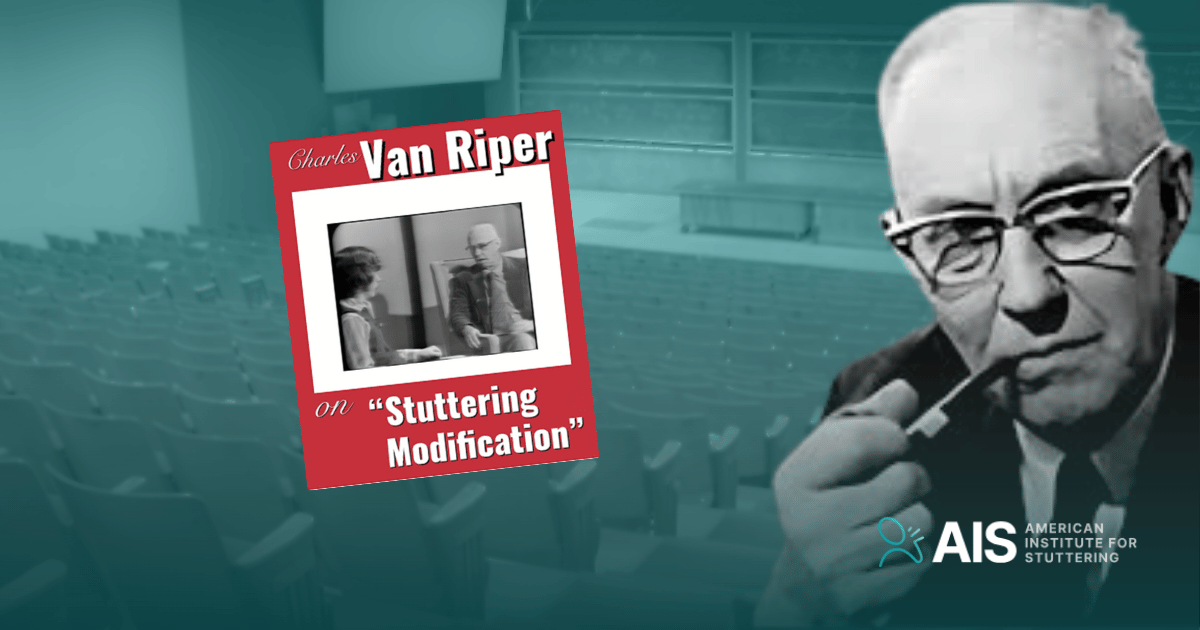
Van Riper is considered the originator of the field of speech-language pathology. He was himself a pronounced stutterer and knew firsthand how fear of speaking and stuttering contributed to negative quality of life outcomes. He developed a program while exploring his own experiences and those of others who stutter, outlining his approach in his 1973 book on stuttering treatment.
He developed a highly organized program that had four phases: identification, desensitization, modification, stabilization. Van Riper emphasized that one could not change their speech pattern effectively until they first became extremely aware of how they stutter and to become desensitized to their speech fears.
The phases were meant to be carried out in a distinct sequence, without moving on until achieving success in each previous phase.
Many therapists integrate the strategies from this therapy with other modalities, rather than strictly following Van Riper's protocol.
At AIS, our therapists are extensively trained in Van Riper methodology alongside other evidence-based approaches, allowing them to draw from multiple techniques to best serve each client. Learn more about our professional training and therapeutic approach.
This assessment phase focuses on identifying own's unique speech pattern, pattern of stuttering behaviors, patterns of avoidance and secondary behaviors. The client explores where tension physically manifests during speech, what types they demonstrate when they talk (repetitions, prolongations, and/or blocks), and if they have fear of specific sounds or words.
In this process, the client is also asked to identify any negative thoughts they have about speech.
Often audio and/or video analysis are used to aid in identification during a stuttering assessment.
Understanding your unique stuttering pattern is the essential first step toward effective therapy. AIS's comprehensive assessment process provides the foundation for personalized treatment that addresses your specific needs. Get started with professional assessment and speech therapy.
This critical phases is aimed at reducing negative emotions and feelings of shame associated with talking. When one is "sensitive" to something, they tend to react strongly. In desensitization, the goal is to experience stuttered speech with lessened emotional and physiologic reactivity.
This phase of speech therapy involves establishing a hierarchy of challenging speaking situations and approaching them starting with easier tasks and moving up the hierarchy.
Clients are encouraged to "face their fears." This process is first discussed and often involves exercises such as stuttering voluntarily, self-disclosing to others, and working to not rely on listener reactions as a measure of success. This involves working on emotional resilience and self-acceptance.
Plexico et al (2019) reported great benefits from educating others and self-disclosing one's stuttering.
Building emotional resilience and self-acceptance is easier when you're not alone. AIS support groups provide a safe, understanding community where you can practice openness, share experiences, and find encouragement alongside others on the same journey. Explore our support groups.
This phase focuses on practicing physical techniques -ways of changing moments of stuttering with the goal of reducing physical tension. The primary stuttering modification techniques that Van Riper promoted were: Cancellations, Pull-outs, and Preparatory Sets.
The techniques are first practiced in controlled settings and then transferred to real conversations and outside situations. Reading aloud is often used as a way of practicing.
These strategies involve "resetting" tense stutters. It was applied after an episode of struggle. The individual is taught to finish the stuttered word, pause, and then apply a technique (such as voluntary stuttering) and stutter the word again without struggle. Cancellations involve finishing a stuttered word, taking a moment to regroup, and then repeating the word with a smoother approach.
This strategy involves "catching" oneself in the midst of struggle, and actively releasing the physical tension and continuing.
These strategies involve actively anticipating a tense stutter and proactively applying a strategy to stutter that word easily, such as by stretching out the first sound of the word.
This stage emphasizes self-monitoring and preparing for future challenges. Strategies to achieve generalization and maintain motivation are discussed.
Many clients find it necessary to have occasional "booster" sessions to maintain success.
Sustainable progress doesn't end when therapy does. AIS provides ongoing support and booster sessions to help you maintain the gains you've worked hard to achieve, ensuring you have the resources you need as your life and speaking situations evolve. Learn more about our long-term support options.
The rationale of voluntary stuttering, according to Van Riper, was to help the individual become less sensitive to stuttering. Unlike actual stuttering where there is a perceived loss of control, when stuttering on purpose, one can feel greater control and realize they have choice regarding how they stutter.
Van Riper suggested that one choose to pseudo (or fake stutter) on non-feared words as a way to ensure success using the technique and to alter patterns of expectancy.
Many individuals come to incorporate voluntary stuttering as part of their modification techniques. For example, through practice, people naturally find themselves "bouncing" through rather forcing or struggling.
Voluntary stuttering is a powerful technique, but it's most effective when learned and practiced in a supportive therapeutic environment. AIS speech therapists provide expert guidance to help you safely explore this approach and discover what works best for you. Connect with an AIS therapist.
Any approach to fluency treatment needs to match the client's age and individual characterisitcs.
Therapy will look very different for young children, school-aged children and teens. However, techniques such as practicing easier forms of stuttering without fear and avoidance can be incorporated with any age group.
For teens, the emotional and social dimensions of stuttering take on unique significance during these formative years. Identity development, peer relationships, and academic pressures for students all intersect with speech challenges in ways that require specialized therapeutic approaches.
Learn how AIS supports teens through these critical years.
For adults, stuttering modification techniques can be particularly valuable in professional settings where communication confidence directly impacts career opportunities and workplace relationships. Whether you're navigating job interviews, presentations, or daily workplace interactions, age-appropriate strategies can help you communicate effectively while maintaining authenticity.
Discover how AIS helps adults achieve their professional communication goals.
In general, fluency shaping approaches aim at perfect speech fluency and teach the client to change how they speak by using fluency strategies such as stopping to take a deep breath, using light articulatory contacts, focusing on continuous phonation of the vocal cords, using light contact on the initial sound of words, speaking with a slow rate or stretched syllables, or using an easy onset of the vocal folds. Continuous phonation techniques borrow from singing to maintain a smooth flow of speech.
The goal of fluency shaping is to produce smooth speech and eliminate stuttered speech. Modification may be preferred by those who are not inclined to focus so strongly on relearning speech production patterns.
Many therapists utilize integrated speech therapy approaches that draw off the various schools of thoughts regarding best practices for fluency treatment.
A speech therapist who specializes in stuttering treatment can help design an individualized speech therapy treatment program that incorporates one's individual values, goals and motivation and is appropriate given prior therapy experiences, stuttering severity and lifestyle. For example, a person who has previously been unsuccessful with fluency shaping may logically wish to consider a different approach to more fluent speech, fewer avoidance behaviors and an overall better stuttering experience.
By working with a speech-language pathologist who specializes in stuttering, it will be easier to move through the phases of modification therapy if it is the right fit for you.
You will work with your therapist to establish goals and what techniques might work best for you.
Finding the right therapeutic partnership makes all the difference in your stuttering journey. AIS's certified speech-language pathologists specialize in stuttering treatment and are ready to collaborate with you to develop a personalized plan that aligns with your unique goals and communication needs. Connect with an AIS therapist to get started.
Many individuals who stutter discover along the way that they prefer to not change how they talk, but would rather come to stutter openly and authentically. This realization leads to many people coming to redefining success as participation over control, and self-acceptance over desire for change.
Some people who can use their techniques in controlled settings find that in challenging situations, their body returns to its natural patterns of anxiety and reactivity, making their techniques feel unaccessible.
Modification techniques offer alternatives to fluency-focused approaches, emphasizing acceptance and easier stuttering rather than avoidance. Van Riper's four-phase speech therapy program systematically builds awareness, reduces emotional reactivity, and teaches practical modification techniques. The core techniques—cancellation, pull-out, and preparatory set—require patience and practice but can significantly reduce struggle and tension.
Remember that stuttering modification strategies works best when combined with professional guidance and may be integrated with other approaches based on individual needs. Success comes from consistent practice and genuine acceptance of your stuttering while working to make it less effortful.
The speech therapists at AIS are experts working with children, teens and adults who stutter, clutter, or demonstrate other fluency disorders. We customize techniques according to your unique needs.
AIS provides a community where each client has a voice and access to a supportive, interactive community. We offer financial assistance so that no one is turned away.
Whether you're exploring stuttering modification therapy for yourself or your child, you deserve expert guidance in a welcoming environment where financial barriers won't stand in your way. Begin your journey with AIS's expert team—schedule a consultation to explore how our individualized approach can help you communicate with greater ease and confidence. Get started today.